Blog
Get the latest news on how products at WunderGraph are built, technologies are used, and join the teams helping to build a better landscape of API integration.
Why your LLM bill exploded overnight (and how to regain control)
LLM bills spike overnight from retry storms, agent loops, and prompt bloat, not steady usage. Learn the guardrails: retry budgets, token caps, cost-aware routing, and unit-metric alerts, all enforced at one boundary.

Brendan Bondurant & Tanya Deputatova
Content Manager · Data Architect: GTM & MI
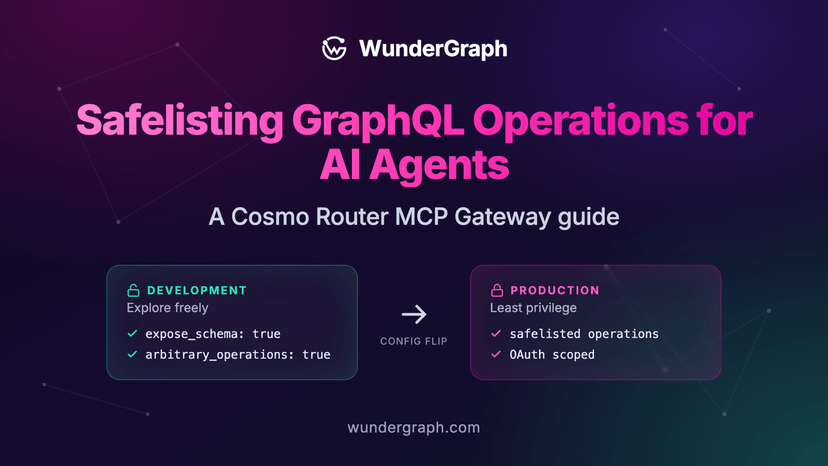
Safelist GraphQL Operations for AI Agents | Cosmo MCP Gateway
Learn how to use the Cosmo Router MCP Gateway to expose federated GraphQL schemas to AI agents with reviewed, OAuth-scoped MCP tools.
Ahmet Soormally
Vice President of Product at WunderGraph
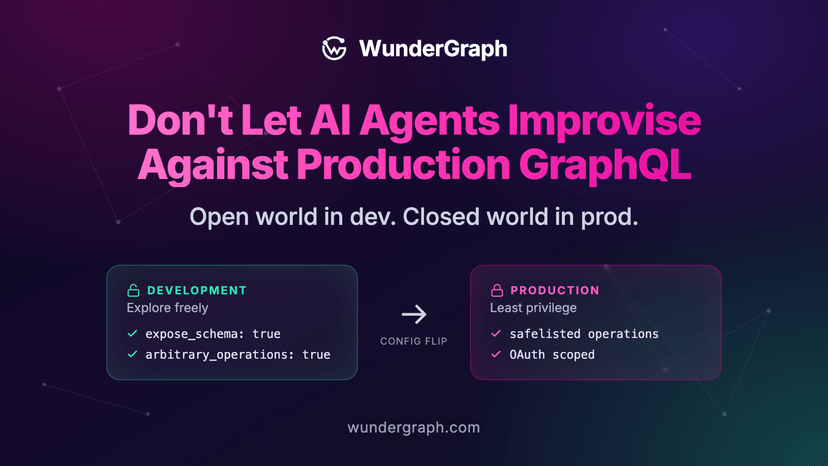
Don't Let AI Agents Improvise Against Production GraphQL
AI agents should explore your GraphQL schema in development and invoke only reviewed operations in production. Design in an open world, ship in a closed one — using the Cosmo Router MCP Gateway.
Ahmet Soormally
Vice President of Product at WunderGraph
RAG Cost Control for AI Agents: How to Prevent AI Spend Drifts
RAG and agentic costs drift when retrieval, tools, API calls, and routing lack a shared control layer. Learn how to measure, audit, and reduce spend with API orchestration—without rebuilding from scratch.
Brendan Bondurant & Tanya Deputatova
Content Manager · Data Architect: GTM & MI
The Three Bottlenecks AI Can't Code Away
AI writes 42% of code, but engineering teams aren't shipping faster. The bottleneck moved to coordination, governance, and review. Here's how GraphQL Federation fixes all three.
Jens Neuse
CEO & Co-Founder at WunderGraph
GraphQL vs REST: 18 Claims Fact-Checked with Primary Sources (2026)
We fact-checked 18 claims comparing GraphQL and REST against peer-reviewed research, official docs, and security reports. Only 3 held up. Here's what the evidence actually says.
Jens Neuse
CEO & Co-Founder at WunderGraph
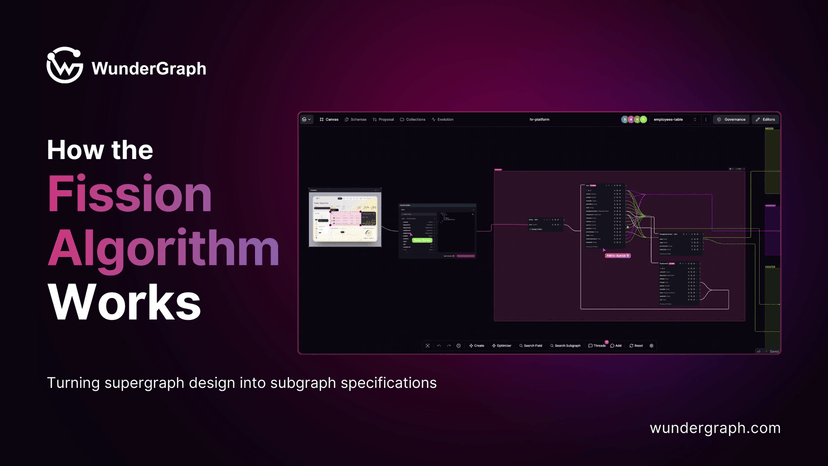
How the Fission Algorithm Works for Top‑Down GraphQL Federation Schema Design
A technical deep dive into the Fission algorithm, how it decomposes a consumer-facing supergraph into subgraph responsibilities, automating the hardest part of GraphQL Federation at scale.
Jens Neuse
CEO & Co-Founder at WunderGraph
Microservice Dependencies: How @requires Makes Them Explicit
Learn the different types of microservice coupling and how GraphQL Federation's @requires directive makes cross-service dependencies explicit, visible, and validated at build time.
Jens Neuse
CEO & Co-Founder at WunderGraph
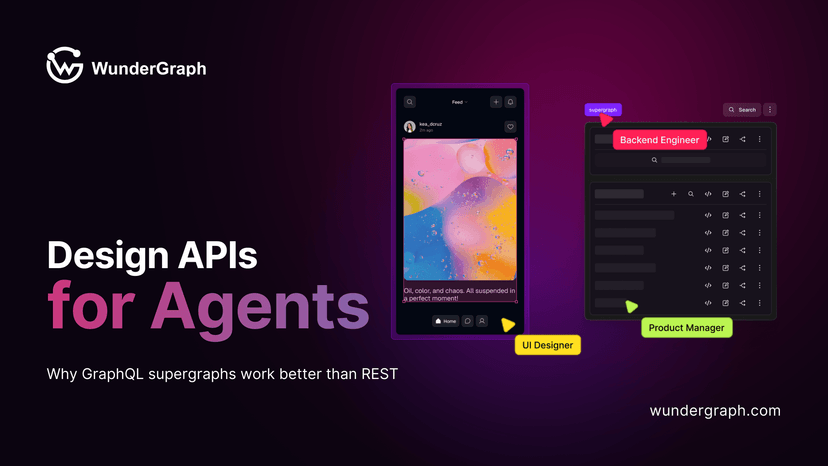
GraphQL Is the API Layer AI Agents Actually Need
AI agents need to discover and call APIs with minimal tokens. The GraphQL supergraph gives them a typed, navigable schema across your entire organization.
Jens Neuse
CEO & Co-Founder at WunderGraph
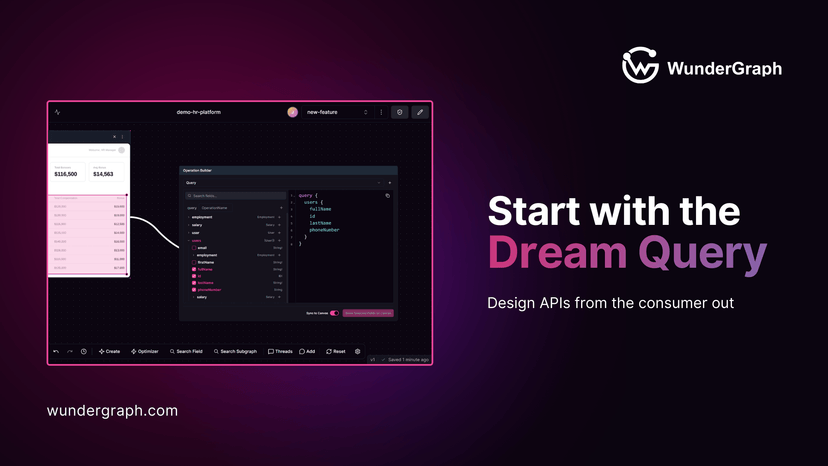
The Dream Query: Consumer-First GraphQL API Design
Start with the query your consumer would write if there were no constraints, then work backwards. A practical guide to consumer-first GraphQL schema design.
Jens Neuse
CEO & Co-Founder at WunderGraph
Design Like a Monolith, Implement as Microservices
The monolith vs. microservices debate is a false choice. Learn how to design a coherent API surface while distributing implementation across teams with GraphQL Federation.
Jens Neuse
CEO & Co-Founder at WunderGraph
Why Platform Engineering Teams Become Bottlenecks at Scale
Platform engineering teams are drowning in requests. Not because they are understaffed, but because every API change in the organization flows through them. Here is how to fix the bottleneck without adding headcount.
Jens Neuse
CEO & Co-Founder at WunderGraph
Why MCP Is the Ceiling, Not the Foundation of Enterprise AI Agent Architecture
MCP standardized how AI agents invoke tools — but not what they can see or do. Here's why the real bottleneck in enterprise AI is data readiness, not protocol adoption.
Ahmet Soormally
Vice President of Product at WunderGraph
GraphQL Federation Was Built Backwards
GraphQL Federation composes the supergraph from subgraphs. The consumer-facing API should be the starting point, not a side effect, which is why we built Fission to flip that model.
Jens Neuse
CEO & Co-Founder at WunderGraph
The Missing Layer in GraphQL Federation
GraphQL Federation promises a unified API across teams. But without collaboration and governance tooling, it creates a coordination bottleneck that slows everyone down. Here is what is missing and how to fix it.
Jens Neuse
CEO & Co-Founder at WunderGraph
10 Principles for Designing Good GraphQL Schemas
Learn 10 proven principles for designing GraphQL schemas that scale. Covers capability-based design, error handling, nullability, pagination, federation, and avoiding common pitfalls from companies like eBay and SoundCloud.
Jens Neuse
CEO & Co-Founder at WunderGraph
The Hidden Cost of Non-Compliance in AI
Learn how the EU AI Act, Colorado's ADMT law (SB 26-189), and California SB-53 impact engineering teams and how to build audit-ready AI systems.
Brendan Bondurant & Tanya Deputatova
Content Manager · Data Architect: GTM & MI
GraphQL Operation Descriptions: How a Spec Update Solved Our MCP Problem
The September 2025 GraphQL spec update added official support for operation descriptions. This solved a real problem: how to document GraphQL operations for MCP tools without custom hacks or non-standard conventions.
Ahmet Soormally
Vice President of Product at WunderGraph
When Prompt Injection Gets Real: Use GraphQL Federation to Contain It
How GraphQL Federation helps protect AI systems from prompt injection by enforcing runtime boundaries, scoped access, and signed configurations.
Brendan Bondurant & Tanya Deputatova
Content Manager · Data Architect: GTM & MI
MCP Gateway with Curated GraphQL Persisted Operations
Curated GraphQL Persisted Operations (POs) provide a secure, task-level facade for exposing APIs to LLMs via the Modex Context Protocol (MCP). They reduce complexity, enforce security, and ensure stable tool use compared to raw REST APIs.
Ahmet Soormally
Vice President of Product at WunderGraph
A Smooth API Developer Experience with WunderGraph Cosmo
How WunderGraph Cosmo simplifies GraphQL Federation with CQRS, event-driven federated subscriptions, and persisted operations for a secure, scalable developer experience.

Vincent Vermersch
CTO at NéMo
Understanding GraphQL Federation Versions (V1, V1.5, and V2)
Learn the key differences between GraphQL Federation V1, V1.5, and V2. Understand how entities, value types, and directives like @external and @shareable evolved, and how routers interpret subgraphs across versions for composition compatibility.
David Stutt
Founding Engineer at WunderGraph
Apollo Federation vs GraphQL Federation vs Cosmo Connect
Choosing between Apollo Federation, GraphQL Federation, and Cosmo Connect? Here is how batching, entity modeling, and operational overhead actually differ — with real schema examples.
Jens Neuse
CEO & Co-Founder at WunderGraph
A GraphQL Federation directive for Subgraph-level compliance: @openfed__requireFetchReasons
The @requires directive in GraphQL Federation can leak sensitive fields. See how @openfed__requireFetchReasons improves security, compliance, and audit readiness.
Jens Neuse
CEO & Co-Founder at WunderGraph
Cosmo Connect Tutorials for Router Plugins and gRPC Services
Step-by-step tutorials for Cosmo Connect: build Router Plugins, deploy gRPC services, and integrate subgraphs into a federated GraphQL API.
Brendan Bondurant
Content Manager
The Evolution of GraphQL Federation and the Entity Layer
How GraphQL evolved from monoliths to Schema Stitching to Federation, and why the Entity Layer has become the foundation for unified APIs.
Jens Neuse
CEO & Co-Founder at WunderGraph
Cosmo Connect: Federation Made Accessible
Cosmo Connect lets backends use gRPC while frontends see one GraphQL API, lowering the barrier to federation across teams and languages.

Jesse Thompson
Software Engineer, WunderGraph
The Future of GraphQL Federation
A crosspost of Curtis Layne’s deep dive into the architectural tradeoffs of Apollo Federation and the path toward simpler, faster, more scalable approaches to GraphQL Federation.
Curtis Layne
Behind the Counter: How Cosmo Works
Ever wonder how GraphQL federation works in practice? This story-driven guide uses a food truck park to explain Cosmo’s role in schema composition and routing.
Brendan Bondurant
Content Manager
The Future of Federation: Replacing GraphQL Subgraphs with gRPC Services
Why WunderGraph is moving Federation beyond GraphQL Subgraphs to enable simpler, faster, type-safe APIs using gRPC under the hood.
Jens Neuse
CEO & Co-Founder at WunderGraph
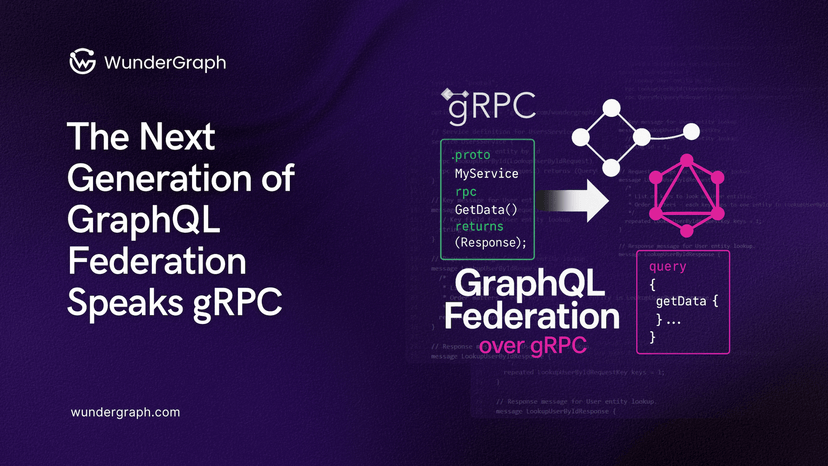
GraphQL Federation Over gRPC: Type-Safe Subgraphs Explained
Compile GraphQL Federation Subgraph SDLs to type-safe gRPC services with built-in data loading and zero N+1 problems — no `_Any` hacks, no shim layers.
Jens Neuse
CEO & Co-Founder at WunderGraph
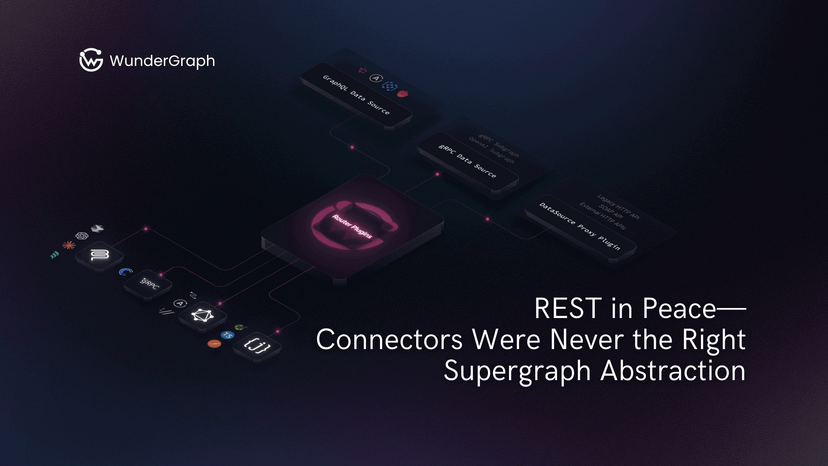
REST in Peace—Connectors Were Never the Right Supergraph Abstraction
Learn how we use LLMs to automate API integration with a single prompt—cutting implementation costs by 99%.
Jens Neuse
CEO & Co-Founder at WunderGraph
Scaling GraphQL Federation: Inside Cosmo’s Food Park
Explore GraphQL federation through the lens of a food truck park. A story-driven guide to core concepts, tradeoffs, and how federation helps systems scale.
Brendan Bondurant
Content Manager
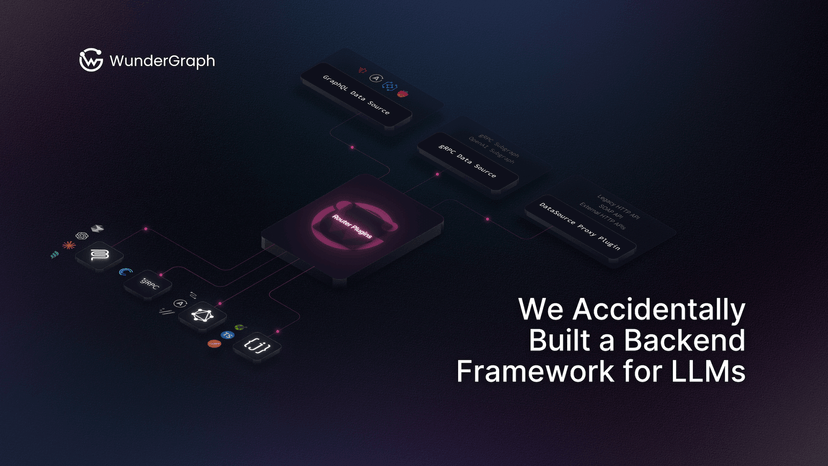
How to Connect REST and gRPC APIs to GraphQL Federation with Cosmo Connect
Most backends speak REST or gRPC, not GraphQL. Cosmo Connect lets you integrate them into a federated graph without rewriting services — and LLMs can generate the adapter code.
Jens Neuse
CEO & Co-Founder at WunderGraph
When to Migrate from Cosmo OSS
Cosmo OSS is a great way to start. But when scale, governance, and compliance become blockers, here’s how to know it’s time to move to Cosmo Enterprise.
Brendan Bondurant
Content Manager
Golang sync.WaitGroup: Powerful, but tricky
Learn how to use Go’s sync.WaitGroup correctly with real-world examples, common mistakes, and performance tips. Avoid deadlocks, leaks, and master goroutine management.
Jens Neuse
CEO & Co-Founder at WunderGraph
Why AI Needs A Common Language
Discover how AI systems need structured protocols for effective collaboration. Learn about Model Context Protocol (MCP), agent-to-agent communication, and why natural language alone will not scale for AI interactions. Essential reading for AI developers and API architects.
Cameron Sechrist
Head of Engineering at Stax.ai
Rethinking API Access in the Age of AI Agents
Traditional rate limiting doesn’t protect against misuse by AI agents. Discover how harm limiting offers a new, proactive approach to secure API access.
Cameron Sechrist
Head of Engineering at Stax.ai
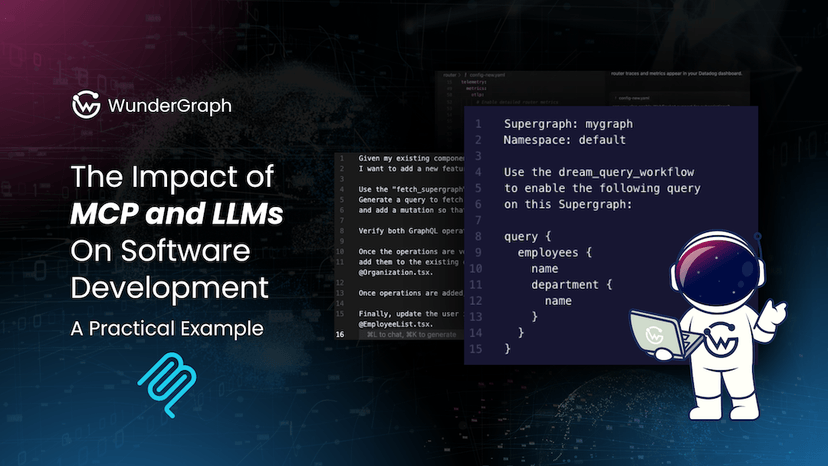
The Impact of MCP and LLMs on Software Development - A Practical Example
See how Model Context Protocol enables LLMs to complete real dev tasks like schema exploration, query generation, and router config—all in a single prompt.
Jens Neuse
CEO & Co-Founder at WunderGraph
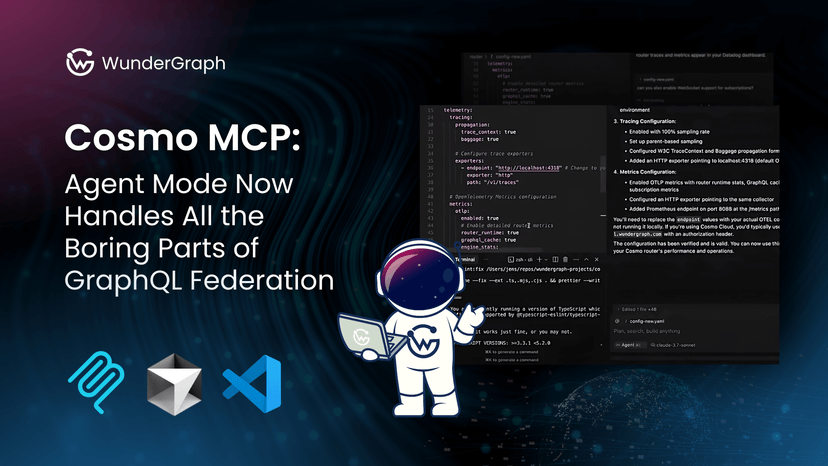
Cosmo MCP: Agent Mode now handles all the boring parts of GraphQL Federation (Right in your IDE)
Use Cosmo MCP with Cursor, Windsurf, or VSCode to automate schema changes, query validation, and router config—right from your IDE, no CLI juggling required.
Jens Neuse
CEO & Co-Founder at WunderGraph
Query Plan Regression Testing in GraphQL Federation
Discover how we built automated quality checks for GraphQL Federation that catch breaking changes before they hit production. Learn about our query plan testing tools and GitHub workflows that help maintain reliability at scale.
Alessandro Pagnin
Engineer at WunderGraph
Golang Sync.Pool | Memory Pool Example
How Go’s sync.Pool affects memory in high-throughput systems: when pooling helps, when it hurts, and how to cap object size safely.
Jens Neuse
CEO & Co-Founder at WunderGraph
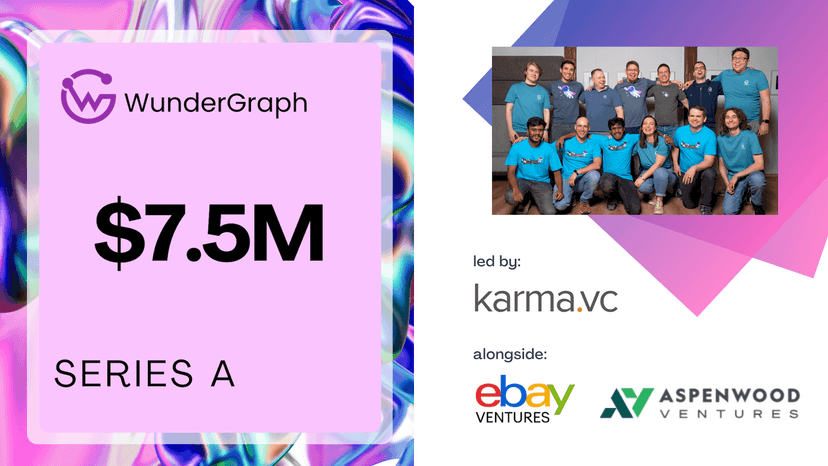
Why we couldn't resist raising from eBay - our Series A announcement
From near shutdown to strategic investment by eBay, this is how WunderGraph’s open-source GraphQL Federation platform became the future of enterprise APIs.
Jens Neuse
CEO & Co-Founder at WunderGraph
@inaccessible Keys in Federated GraphQL APIs - A Deep Dive
The @inaccessible directive in GraphQL Federation allows you to hide keys from the public and manage sensitive data access in your federated GraphQL API.
Jens Neuse
CEO & Co-Founder at WunderGraph
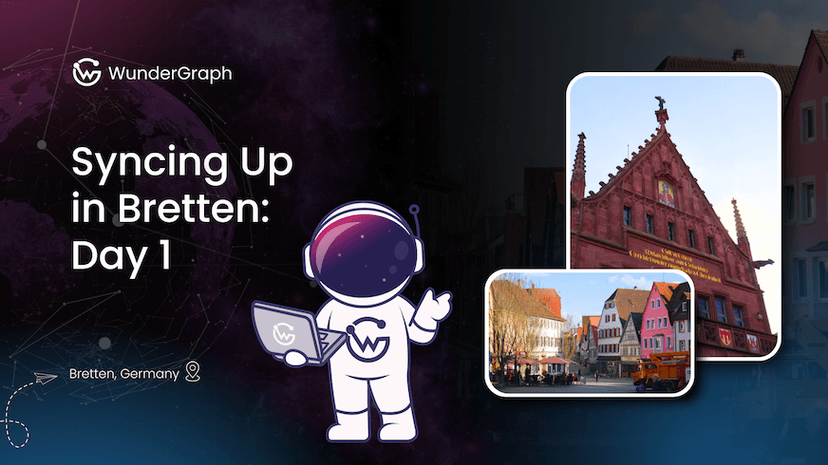
Syncing Up in Bretten: Day 1
The WunderGraph team gets together in Bretten, Germany to work together.
Brendan Bondurant
Content Manager
GraphQL Federation Architecture: Open/Closed Principle & Project-Based SuperGraphs
Learn how GraphQL Federation enables the Open/Closed Principle in API design. Discover SuperGraphs, subgraph reuse, and why REST struggles with extensibility.
Jens Neuse
CEO & Co-Founder at WunderGraph
Supergraph Kickoff: Scaling Your Federated GraphQL for the Super Bowl
Discover how to prep your GraphQL Federation for Super Bowl-scale traffic with Cosmo Router’s cache warm-up strategy and tips to eliminate cold starts.
Jens Neuse
CEO & Co-Founder at WunderGraph
Introducing the @configureDescription directive for GraphQL Federation
Fine-tune GraphQL Federation schema composition with @openfed__configureDescription. Control which descriptions appear—and which do not.
David Stutt
Founding Engineer at WunderGraph
How Normalization affects Query Plan Caching in GraphQL Federation
Explore how normalization boosts query plan cache hits in GraphQL Federation. Learn about three normalization forms and how they improve performance and analytics.
Jens Neuse & Sergiy Petrunin
CEO & Co-Founder at WunderGraph · Founding Engineer at WunderGraph
Is gRPC Really Better for Microservices Than GraphQL?
Compare gRPC and GraphQL for microservices. Exploring strengths, weaknesses, and when to use each for performance, flexibility, and real-time needs
Brendan Bondurant
Content Manager
Expr Lang: Go centric expression language for dynamic configurations
How Cosmo Router uses Expr Lang to change GraphQL behavior through configuration alone, with worked examples for rate limiting and blocking mutations.
Jens Neuse
CEO & Co-Founder at WunderGraph
Are Connectors the path forward for GraphQL Federation?
Are GraphQL connectors the right choice for federation? This deep dive covers @connect directives, N+1 risks, testing, schema design, and when subgraphs are the better path.
Jens Neuse
CEO & Co-Founder at WunderGraph
I was wrong about GraphQL
After 6 years building GraphQL tools, I’m revisiting past opinions to reflect on how experience has reshaped my views on APIs, federation, and tooling.
Jens Neuse
CEO & Co-Founder at WunderGraph
A Comprehensive Overview of GraphQL Federation in Open Source
Explore open source GraphQL Federation—how Subgraphs, a Router, and schema governance work, how WunderGraph Cosmo compares to Apollo and Hive, and how to get started.
Stefan Avram
Co-Founder at WunderGraph
How to align Open Source and Enterprise Sales
Learn how WunderGraph aligns Open Source and Enterprise Sales without feature-gating. Balancing community trust and commercial success the right way.
Jens Neuse
CEO & Co-Founder at WunderGraph
Live from the GraphQL Conf: The State of Distributed GraphQL 2024
Learn about the state of distributed GraphQL in 2024 and explore some of the exciting developments that are happening in this space. This is an update on GraphQL Federation, the work of the GraphQL Foundation, and the Composite Schema Working Group.
Jens Neuse
CEO & Co-Founder at WunderGraph
Zero-Cost Abstractions for @skip and @include in Federated GraphQL
Using @skip and @include in GraphQL federation can hurt performance—learn how Cosmo Router's zero-cost abstraction removes overhead and boosts speed.
Jens Neuse
CEO & Co-Founder at WunderGraph
Cosmo Graph Feature Flags vs. Apollo Progressive Overrides: A Different Model for Gradual Rollouts
Run multiple Supergraph compositions in parallel, swap Subgraphs per request via header or cookie, and test schema changes without deploying a new environment per branch. How Graph Feature Flags work in Cosmo.
Jens Neuse
CEO & Co-Founder at WunderGraph
99% Smaller GraphQL Queries with AST Minification
Speed up GraphQL Federation by 25% with AST Minification. Learn how Cosmo Router generates smaller queries and outperforms Apollo in Subgraph execution.
Jens Neuse
CEO & Co-Founder at WunderGraph
Designing a Multi-Tenant Federated GraphQL Schema
Designing a multi-tenant federated GraphQL schema is a challenge. Let's explore the different approaches to multi-tenancy in a federated GraphQL API.
Jens Neuse
CEO & Co-Founder at WunderGraph
Cosmo OSS Schema Registry Compatibility Mode for Apollo Router and Gateway
Run Apollo Router or Gateway with Cosmo OSS as your open-source schema registry. Compatible with Apollo Federation and ideal for gradual migration.
Jens Neuse
CEO & Co-Founder at WunderGraph
SSO Just Got Better: OpenID Connect + SCIM for Identity Management
Learn how combining SCIM and OpenID Connect upgrades your SSO. Automate user provisioning, boost security, and streamline identity management at scale.
Jens Neuse
CEO & Co-Founder at WunderGraph
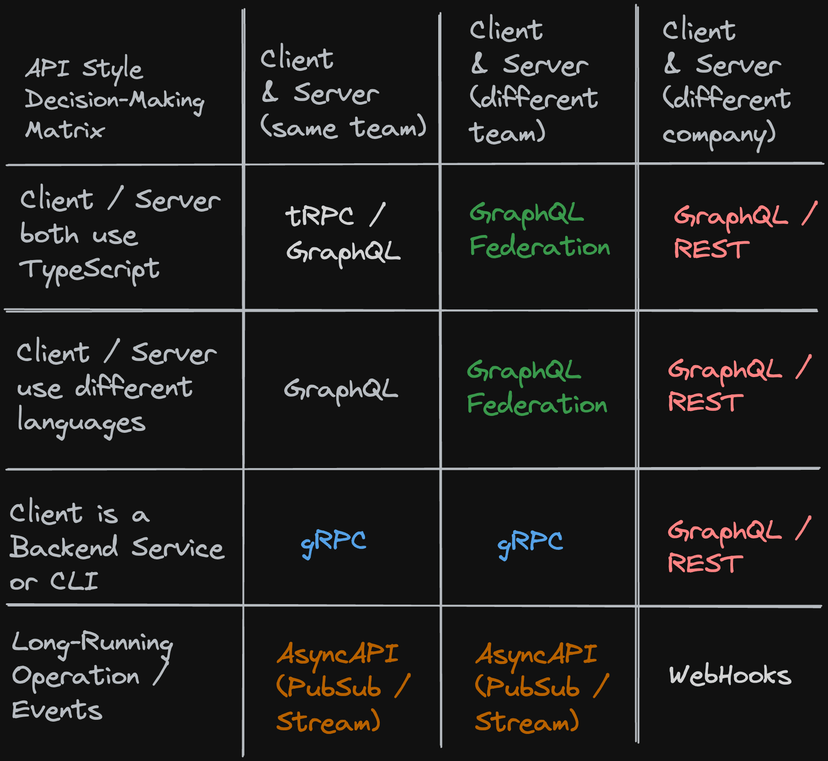
When to use GraphQL vs Federation vs tRPC vs REST vs gRPC vs AsyncAPI vs WebHooks
A practical framework for choosing between GraphQL, Federation, tRPC, REST, gRPC, AsyncAPI, and WebHooks — based on use case and team structure, not hype.
Jens Neuse
CEO & Co-Founder at WunderGraph
Why Teams Still Choose GraphQL, and Why Others Move Away
Why enterprise teams keep adopting GraphQL Federation while smaller teams move to REST and tRPC — and what changed in the GraphQL ecosystem after 2023.
Jens Neuse
CEO & Co-Founder at WunderGraph
Implementing the Viewer Pattern in Federated GraphQL APIs
The Viewer Pattern is a popular way to model GraphQL APIs around a 'viewer'. This article explains how the pattern can be implemented and what benefits it brings for federated GraphQL APIs.
Jens Neuse
CEO & Co-Founder at WunderGraph
Rate Limiting GraphQL Federation with Cosmo Router & Redis
Learn how to protect your federated GraphQL API from abuse and DDoS attacks by implementing effective, centralized rate limiting with Cosmo Router and Redis.
Jens Neuse
CEO & Co-Founder at WunderGraph
Why you should avoid exhaustive switch case in API clients
Avoid exhaustive switch cases in API clients — they break forward compatibility and reveal deeper API design flaws you might miss.
Jens Neuse
CEO & Co-Founder at WunderGraph
Announcing Field Level Authorization for GraphQL Federation with Cosmo Router
Jens Neuse
CEO & Co-Founder at WunderGraph
Effective Integration Testing for Distributed Systems: Mastering Cosmo Router with GraphQL Federation
Discover the art of integration testing for distributed systems through our in-depth guide. Learn how to expertly test the Cosmo Router using advanced techniques in GraphQL Federation, including the utilization of subgraphs and subscriptions, to ensure seamless end-to-end functionality, correctness and superior system performance.
Jens Neuse
CEO & Co-Founder at WunderGraph
Scaling GraphQL Subscriptions in Go with Epoll and Event Driven Architecture
Learn how we're leveraging Epoll/Kqueue and Event-Driven Architecture to scale GraphQL Subscriptions in Go. We've reduced the number of goroutines by 99% and the memory consumption by 90% without sacrificing performance.
Jens Neuse
CEO & Co-Founder at WunderGraph
Announcing EDFS - Event Driven Federated Subscriptions
Event Driven Federated Subscriptions, or EDFS for short, is a way to build federated GraphQL Subscriptions on the Event Driven Architecture (EDA) pattern. It has since evolved into Cosmo Streams, which works with Kafka, NATS and Redis.
Jens Neuse
CEO & Co-Founder at WunderGraph
Native Subscriptions with Cosmo Router
How an event-based approach makes GraphQL Subscriptions better in Federation.
Prithwish Nath
GraphQL Federation Field-level Metrics 101
Explore how field-level metrics in federated GraphQL help debug faster, cut costs, and optimize APIs. See how Cosmo makes data-driven scaling effortless.
Prithwish Nath
GraphQL is Finally Boring (And That’s Why It’s Winning in 2026)
Is GraphQL still relevant? Learn why GraphQL adoption is stable, where it excels (federation, API composition), when to use it vs REST, and how enterprises use it at scale.
Prithwish Nath
Introducing astjson: Transform and Merge JSON Objects with Unmatched Speed in Go
astjson is a Go package that parses JSON once into an AST, then merges and transforms subgraph responses without re-parsing, cutting Cosmo Router p99 latency by 44% and memory by 60%.
Jens Neuse
CEO & Co-Founder at WunderGraph
How to Migrate from a GraphQL Monolith to Federation
Learn how to migrate a GraphQL monolith to federation incrementally using the strangler-fig pattern, @override, and Cosmo's schema governance tools.
Stefan Avram
Co-Founder at WunderGraph
How to analyze the usage of your GraphQL Schema
GraphQL schema usage shows which fields each client queries. Use it to deprecate unused fields, detect real breaking changes, and go beyond path-based analytics in federated graphs.
Jens Neuse
CEO & Co-Founder at WunderGraph
An Open Source Schema Registry with Schema Checks for Federated GraphQL
With Cosmo, it’s easier than ever to manage your federated GraphQL schemas and prevent composition errors and breaking changes before they reach production.
Prithwish Nath
An Introduction to Cosmo Router: Open-Source Federation v1 and v2 Gateway
How the Cosmo Router works: query planning, request batching, request deduplication, stateless scaling, Go custom modules, and OpenTelemetry metrics.
Prithwish Nath
Dataloader 3.0: A new algorithm to solve the N+1 Problem
Introducing a new algorithm to solve GraphQL’s N+1 problem. Learn how breadth-first data loading cuts complexity and boosts performance up to 5x.
Jens Neuse
CEO & Co-Founder at WunderGraph
5 Best Practices for Backends-for-Frontends
Five practices for building Backends-for-Frontends: one BFF per user experience, avoiding fan-out failures, consistent error handling, TypeScript contracts, and when to move to GraphQL Federation instead.
Prithwish Nath
7 Key Lessons I Learned While Building Backends-for-Frontends
Seven practical lessons from building production BFFs — gateway vs BFF, error normalization, integration testing, and when DRY hurts more than it helps.
Prithwish Nath
Preventing prompt injections with Honeypot functions
Learn how Honeypot functions help prevent prompt injection attacks in AI-powered APIs built with OpenAI.
Jens Neuse
CEO & Co-Founder at WunderGraph
GraphQL doesn't solve under & overfetching, Relay & WunderGraph do
GraphQL does not eliminate overfetching, underfetching, or waterfalls in practice. Measurements from eight production apps, and the three reasons why.
Jens Neuse
CEO & Co-Founder at WunderGraph
Is GraphQL dying? 2023 Trend Analysis of REST, GraphQL, OpenAPI, SOAP, gRPC and tRPC
Jens Neuse
CEO & Co-Founder at WunderGraph
15 GraphQL Developer Tools I Use To Make Building APIs Easier (2026)
The GraphQL tools worth knowing in 2026 — from federation and schema governance to observability, testing, and emerging AI automation with Cosmo, MCP Gateway, and more.
Prithwish Nath
How to be the worst engineer on your team?
To what extent should we compare ourselves to others? How can we channel differences positively?
David Stutt
Founding Engineer at WunderGraph
The most important lesson I've had to learn as a technical founder
Technical founders often overbuild and under-market. Learn why focusing on customers, sales, and go-to-market matters more than perfect code.
Jens Neuse
CEO & Co-Founder at WunderGraph
GraphQL's @defer and @stream Directives are overkill
The GraphQL directives @defer and @stream are a great way to incrementally load data, but they are a complex solution that can be solved in a much simpler way.
Jens Neuse
CEO & Co-Founder at WunderGraph
The simplicity of tRPC with the power of GraphQL
tRPC is a new alternative to GraphQL that promises to be a lot simpler, but at what cost? What tradeoffs does it make? Let's find out!
Jens Neuse
CEO & Co-Founder at WunderGraph
GraphQL Subscriptions: WebSockets vs SSE and Federation Quirks
Learn how GraphQL subscriptions work, the differences between WebSockets and SSE, and the quirks of subscriptions in federated supergraphs. See how WunderGraph Cosmo helps unify multiple subscription protocols.
Jens Neuse & Yuri Buerov
CEO & Co-Founder at WunderGraph
GraphQL is not Terraform
GraphQL is used in many different ways. In this post, I'd like to show why GraphQL is not ideal as a configuration language.
Jens Neuse
CEO & Co-Founder at WunderGraph
5 ways to stitch, integrate, compose & federate multiple GraphQL APIs
Combining multiple GraphQL APIs is harder than it looks. Learn five approaches — stitching, wrapping, federation, composition, and connectors — and when to use each.
Jens Neuse
CEO & Co-Founder at WunderGraph
Stop Building Your MVP Before You Figure Out These 7 Founder Lessons
Most technical founders overbuild and underplan. Learn 7 practical lessons on user acquisition, sales, and strategy before writing a single line of code.
jensneuse
Open Source GraphQL CDN / Edge Cache with Cloudflare, Fastly, and Fly.io
How to add edge caching to federated GraphQL APIs with the Cosmo Router, using Automatic Persisted Queries and Cache-Control so any CDN like Cloudflare, Fastly, or Fly.io can cache responses without vendor lock-in.
Jens Neuse & Dustin Deus
CEO & Co-Founder at WunderGraph · Co-Founder of WunderGraph
GraphQL Subscriptions: Why we use SSE/Fetch over Websockets
WebSockets should be deprecated for GraphQL Subscriptions. Instead, we're proposing to use Server Sent Events.
Jens Neuse
CEO & Co-Founder at WunderGraph
API Design Best Practices for Long-Running Operations: GraphQL vs REST
REST and GraphQL handle long-running operations differently. This guide compares both approaches — polling, webhooks, subscriptions — with schema examples and trade-offs for each.
Jens Neuse
CEO & Co-Founder at WunderGraph
Thunk-based Resolvers: Building a Flexible GraphQL API Gateway
Learn how thunk-based resolvers enable modular, schema-free GraphQL Gateways. Boost flexibility, performance, and support for REST, federation, and subscriptions.
Jens Neuse
CEO & Co-Founder at WunderGraph
How to market your product as a Technical Founder
How WunderGraph’s founders grew their user base through hands-on marketing—from cold outreach to content and community—in just 6 months.
Stefan Avram
Co-Founder at WunderGraph
What every GraphQL user should know about HTTP and REST
Stop choosing between GraphQL and REST. Combine their strengths to build more flexible, powerful APIs with the best of both worlds.
Jens Neuse
CEO & Co-Founder at WunderGraph
GraphQL file uploads - evaluating the 5 most common approaches
Explore 5 ways to handle file uploads in GraphQL, from base64 to S3 to native multipart uploads in the Cosmo Router. See which approach balances speed and security.
Jens Neuse
CEO & Co-Founder at WunderGraph
GraphQL in production - Analyzing public GraphQL APIs #1: Twitch.tv
Explore how Twitch runs GraphQL in production. From batching to APQ, HTTP quirks, and performance trade-offs—learn what works and what to avoid at scale.
Jens Neuse
CEO & Co-Founder at WunderGraph
The Fusion of GraphQL, REST, JSON-Schema and HTTP2
REST vs. GraphQL is the wrong question. Instead, combine the two! Making GraphQL more RESTful is the better solution than choosing one technology exclusively.
Jens Neuse
CEO & Co-Founder at WunderGraph
Versionless APIs - Making APIs backwards compatible FOREVER to enable businesses to collaborate
How to evolve APIs without breaking clients — using persisted operations, schema history, and operation rewriting instead of versioned endpoints.
Jens Neuse
CEO & Co-Founder at WunderGraph
The complete GraphQL Security Guide: Fixing the 13 most common GraphQL Vulnerabilities to make your API production ready
A complete guide to the 13 most common GraphQL vulnerabilities — parsing, denial-of-service, injection, authentication, authorization, introspection, CSRF, and more — with recommended mitigations for each.
Jens Neuse
CEO & Co-Founder at WunderGraph
Generated GraphQL APIs: Tight Coupling as a Service
A discussion on the problems related to generating GraphQL APIs from a Database Schema, like tight coupling the client to the server.
Jens Neuse
CEO & Co-Founder at WunderGraph
Why not use GraphQL?
Analyzing common misconceptions on the discussion around GraphQL vs. REST.
Jens Neuse
CEO & Co-Founder at WunderGraph
GraphQL is not meant to be exposed over the internet
A discussion about the risks of exposing GraphQL directly to the internet, and how to secure a public-facing GraphQL API with introspection controls, rate limiting, cost control, and persisted operations.
Jens Neuse
CEO & Co-Founder at WunderGraph