15 GraphQL Developer Tools I Use To Make Building APIs Easier (2026)
Prithwish Nath
TL;DR
GraphQL is used in production at companies like GitHub, Shopify, and Pinterest, but caching, federation, and schema evolution add real operational complexity.
This post groups 15 GraphQL tools I actually reach for into six categories: Federation & Composition, API Connectors, Schema Governance, Observability, Dev & Testing, and AI & Automation — covering Cosmo, wgc, Cosmo Connect, Cosmo Studio, Hive checks, GraphQL Inspector, Cosmo Router metrics, Apollo GraphOS Insights, GraphiQL, Postman, Code Generator, GraphQL Voyager, Prisma, GraphQL Network Inspector, and the MCP Gateway.
Used together, they help you compose federated graphs, connect REST and gRPC backends, catch breaking changes before production, and give AI agents governed access to your API.
Updated September 2026: I refreshed a few links that had gone stale.
GraphQL is now a mature part of the API landscape and is used in production by companies like Shopify, Pinterest, and GitHub.
Prisma, WunderGraph Cosmo, GraphQL Voyager, and more: here are 15 GraphQL developer tools worth knowing in 2026, organized by the job they do — not just alphabetically. From federation and schema governance to testing and AI automation, these tools have got you covered.
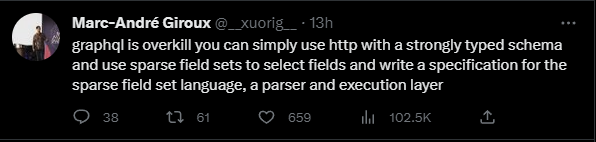
By standardizing how clients request data and how schemas describe available operations, GraphQL can reduce the amount of custom API orchestration teams need to build themselves.
In the right setup, GraphQL can reduce over-fetching and consolidate related data access into fewer requests, though the actual performance benefit depends on query design, caching, and client behavior. Poor query design can still over-fetch nested data, and some workflows still need multiple round trips when related data lives across separate operations or services.
GraphQL is useful, but it does not remove the need to think carefully about caching, resolver performance, security, and schema evolution — including N+1 resolver issues, versioning, and persisted queries.
Thankfully, the GraphQL ecosystem has matured significantly around federation, routers, and schema governance, while AI-facing integration patterns are still early. Knowing the right tools is half the job, so I've grouped the ones I rely on into six categories below.
These are the tools that keep a multi-team supergraph composable, routable, and safe to evolve.
Cosmo is an open-source GraphQL federation platform and an alternative in the same category as Apollo GraphOS. WunderGraph positions the software itself as fully open source under Apache 2.0, including the router, the wgc CLI , and Studio. Commercial offerings focus on managed cloud and enterprise support options.
You register subgraphs, compose the supergraph, run schema checks before deployment, and serve the unified graph through the Go-based Cosmo Router. Composition errors and breaking changes get caught in CI, not after a Friday deploy.
If you're running more than a couple of subgraphs across teams, this is the layer that keeps the supergraph from breaking. Public customer references include SoundCloud (case study) and eBay.
A typical workflow:
- Publish subgraph schemas to the schema registry with
wgc. - Cosmo composes and validates the supergraph for breaking changes.
- The Cosmo Router serves the unified graph to clients.
For platform comparisons, see Cosmo features and Cosmo vs Apollo GraphOS. For the router internals, see An Introduction to Cosmo Router.
The wgc CLI is how you manage a federated graph from the terminal: create federated graphs, publish subgraphs, run composition checks, and fetch router configuration for deployment.
It's the day-to-day interface for platform engineers who live in CI pipelines and terminal sessions. Pair it with schema checks in your pull request workflow so every subgraph change is validated against the full supergraph before merge.
Not every backend team runs a GraphQL server. Connectors bridge that gap.
Cosmo Connect lets you bring REST, gRPC, and other backends onto a federated graph without running GraphQL servers. You define an Apollo-compatible subgraph schema and map it to gRPC-backed services or router plugins, so backend teams can expose existing systems through the graph without standing up a full GraphQL server for each service. Backend teams keep their existing stacks and implement gRPC contracts instead of GraphQL resolvers.
This is especially useful when you're federating legacy microservices or third-party APIs. For REST-to-GraphQL patterns, see the Cosmo Connect tutorials . For tradeoffs with directive-based connectors, read Are Connectors the path forward for GraphQL Federation?. For gRPC-backed federation, read GraphQL Federation Over gRPC.
As your graph grows, schema drift becomes the silent killer. These tools keep contracts enforceable. For background on why a schema registry matters, see An Open Source Schema Registry with Schema Checks for Federated GraphQL.
Cosmo Studio is the web interface for your federated graph: schema explorer, composition history, field-level usage analytics, distributed traces, and check results across subgraphs.
When three teams are publishing schemas independently, Studio is where you see whether a proposed change is breaking, safe, or just suspicious.
Hive from The Guild is a schema registry and governance platform — commonly used alongside The Guild's router stack — that provides composition checks for federated and monolithic GraphQL APIs. If your organization already standardizes on The Guild's toolchain, Hive's schema checks integrate into CI to block breaking changes before they reach consumers.
Cosmo and Hive both cover parts of the schema registry and governance workflow, so the better fit depends on your federation model, surrounding tooling, and operational preferences.
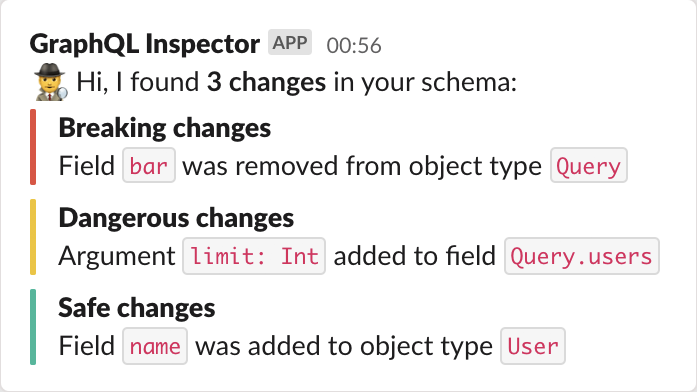
GraphQL Inspector validates, lints, and diffs GraphQL schemas in SDL or AST format. Every change is marked breaking, safe, or dangerous, with Slack, Discord, and CI integrations.
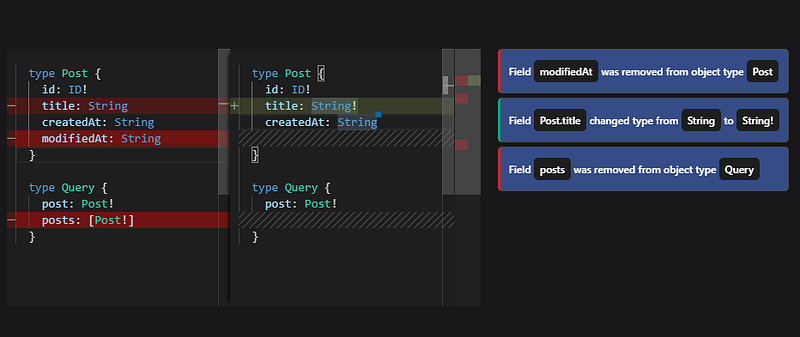
This is incredibly helpful when you're adding a field and need to confirm it won't break existing queries. The standalone GitHub App is retired: use the GitHub Action instead to annotate pull requests with a full schema diff automatically. For principles that help you avoid painful schema changes in the first place, see 10 Principles for Designing Good GraphQL Schemas.
State of GraphQL Federation 2026
How are teams governing schema changes, handling production traffic, and measuring Federation success? Share your experience and get early access to the full report. For every valid survey completed, we'll donate $30 to UNICEF .
You can't optimize what you can't see — especially across a router and multiple subgraphs.
Cosmo Router exports Prometheus metrics for query planning, normalization, and execution caches. OpenTelemetry traces flow into Cosmo Studio or your existing backend (Grafana, Datadog, Jaeger).
For a deeper look at the full observability stack, see Open Source Analytics, Tracing & Monitoring for Federated GraphQL.
Apollo's GraphOS Router reports operation metrics, field-level usage, and traces to GraphOS Studio's Insights suite , and can export the same telemetry over OpenTelemetry to Datadog, New Relic, Prometheus, Jaeger, and other APMs. It's the closest parallel to Cosmo's router metrics and Studio tracing, for teams already standardized on Apollo's router.
The tools you reach for daily while building resolvers, exploring schemas, and debugging requests.
GraphiQL is the open-source in-browser IDE from the GraphQL Foundation. Try queries, explore the schema, and get live syntax validation — without leaving the browser.
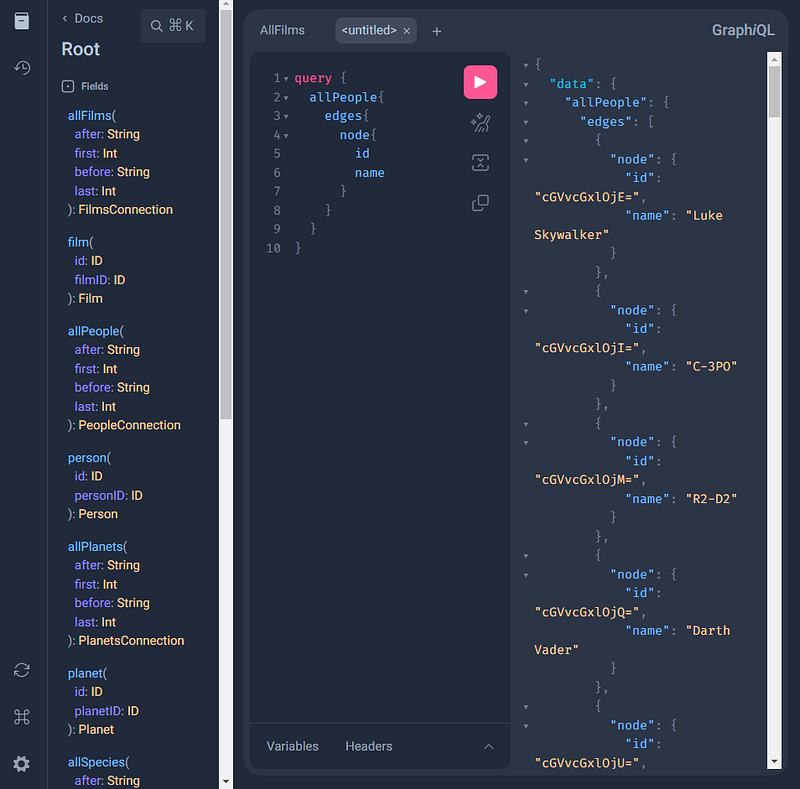
GraphiQL remains the de facto in-browser IDE in the GraphQL ecosystem and is still actively maintained. The old GraphQL Playground project was archived; its best ideas were folded into GraphiQL.
Postman is the go-to tool for API testing. Its GraphQL client supports variables, fragments, schema introspection, and collection-based workflows.
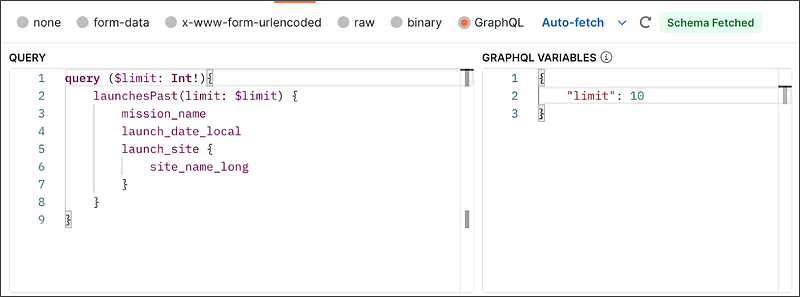
Share collections for federated graph operations, document subgraph endpoints, and test against your router during development — handy when multiple teams contribute to the same supergraph.
GraphQL Code Generator turns your schema and operations into typed client code, server resolvers, and validation helpers across TypeScript, React, Vue, and more.
If you've ever hand-written TypeScript types to match a GraphQL schema, you know the pain: the schema changes, your types drift, and something breaks on a Friday afternoon. Codegen closes that loop.
This replaced graphql-faker on my list — graphql-faker appears to have seen limited recent maintenance, while code generation from a real schema tends to be more useful in day-to-day workflows.
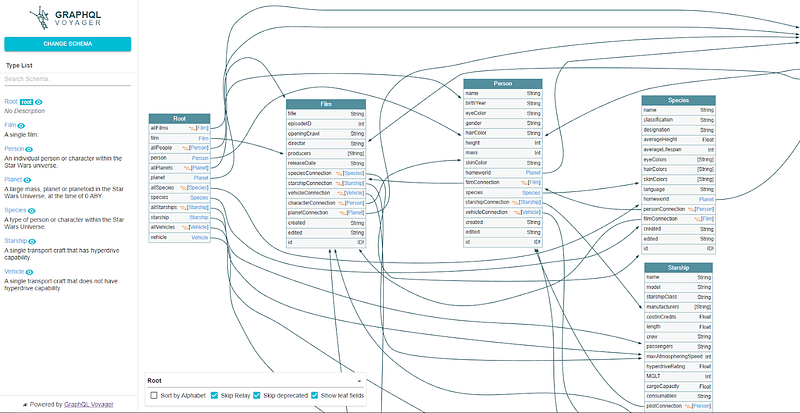
GraphQL Voyager visualizes any GraphQL API as an interactive graph — great for onboarding and exploring relationships between types.
Prisma is a type-safe ORM for relational databases including PostgreSQL, MySQL, and SQL Server. It streamlines data modeling, migrations, and database access inside GraphQL resolvers — though resolver design and N+1 patterns in your GraphQL layer still matter.
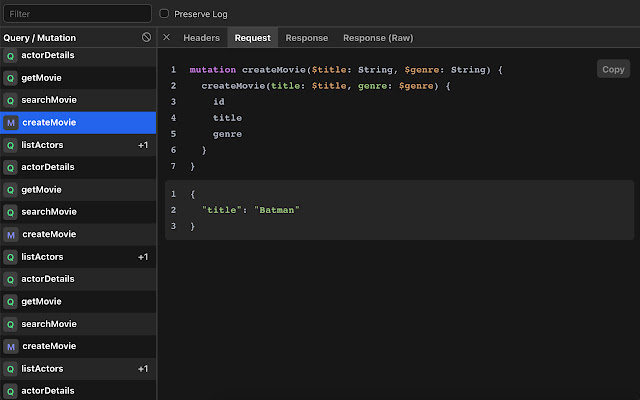
The GraphQL Network Inspector is a Chrome extension that adds a dedicated GraphQL tab to DevTools — inspect batched and persisted queries without sifting through identical Network tab entries.
Back in 2023 the project moved under The Guild , which now backs its development. A compromised update briefly hit the extension in December 2024, part of a wider Chrome extension supply-chain attack; the fix shipped fast, and it's kept shipping updates since (v2.26, June 2026).
AI agents need governed API access, not raw introspection against production.
The Cosmo MCP Gateway exposes your federated graph as MCP tools that LLMs can call through a governed interface. In development, agents can explore the schema; in production, they invoke only reviewed, persisted operations.
This is one emerging way to expose reviewed GraphQL operations to agent-based workflows without giving models unrestricted schema access. For the security model behind it, see Governing AI Agent Access to GraphQL via MCP Gateway.
As developers continue to adopt GraphQL (Postman's 2025 State of the API Report reports 33% of organizations use it, with REST still at 93%), the tooling has matured well beyond basic schema exploration.
From federation with Cosmo and wgc, to connecting legacy APIs with Cosmo Connect, to governing schemas with Studio and Inspector, to giving AI agents governed access through the MCP Gateway — these tools cover much of the lifecycle of building and running GraphQL APIs in 2026.
Whether you're an experienced GraphQL developer or just starting out, I hope this list nudged you toward the right layer of the stack for whatever you're building next.
Frequently Asked Questions (FAQ)
No. Think of this as a toolbox organized by job, not a checklist. For a greenfield project, start with GraphiQL and Postman for exploration, add GraphQL Code Generator for types, then layer in Cosmo and Inspector once your schema and team grow.
WunderGraph Cosmo and the wgc CLI handle composition, routing, and schema checks. Cosmo Connect brings REST and gRPC services onto the graph. Cosmo Studio and GraphQL Inspector govern schema changes in CI. Postman helps you test subgraphs and the supergraph end to end.
Yes, especially if you have multiple clients (web, mobile, internal tools) and complex data graphs. According to Postman's 2025 State of the API Report, 33% of organizations use GraphQL, alongside higher adoption for REST (93%), webhooks, and WebSockets — which reflects its sweet spot: client-driven data access on top of existing services rather than a full REST replacement.
Start with GraphiQL or Postman to learn how queries, mutations, and schemas work against a live endpoint. Once you're comfortable, add GraphQL Code Generator for types and Prisma (or another ORM) for cleaner resolver implementations.
Cosmo Studio, Hive schema checks, and GraphQL Inspector are the heavy hitters. Cosmo runs composition and breaking-change checks in your pipeline; Inspector plugs into GitHub to surface dangerous schema diffs on every PR.
For multi-team federated graphs, the platform layer matters more than any single dev tool. WunderGraph Cosmo (open source, Apache 2.0) and Apollo GraphOS (source-available, ELv2) are two widely used options in this category, and other routers and registries exist as well. Cosmo gives you a schema registry, schema checks, a Go-based router, and analytics, and can be self-hosted under Apache 2.0.
It depends on your layer. For federation: Cosmo and wgc. For connecting legacy APIs: Cosmo Connect. For governance: Cosmo Studio, Hive checks, and GraphQL Inspector. For observability: Cosmo Router metrics and Apollo GraphOS Insights. For day-to-day dev: GraphiQL, Postman, Code Generator, GraphQL Voyager, Prisma, and GraphQL Network Inspector. For teams experimenting with agent access: the Cosmo MCP Gateway.
The Cosmo MCP Gateway exposes reviewed GraphQL operations as MCP tools so AI agents can call your API safely — with schema context in development and a safelist of persisted operations in production. See the MCP Gateway docs and our post on governing AI agent access.