AI Builds. Culture Ships.
Not long ago, people were indispensable at work because of scarcity. Knowing things was a career strategy, and gatekeeping paid the rent. AI has ended that arrangement. Every model on the market can explain Kubernetes to you at 2 am with more patience than your senior engineer had at 2 pm.
What does this shift bring to the workforce?
So now you can use AI to build things and ship faster than ever. How do you know if it actually lands, cuts through the noise, and creates the right impact?
Shipping faster than ever takes more than AI. Behind it is the cultural infrastructure that supports thousands of small daily decisions and interactions that move a customer's needs from an idea to a roadmap item, then to a feature that changes how efficiently a customer operates, the way SoundCloud cut GraphQL compute by 86% with Cosmo.
The value of culture translates to whether people trust you enough to tell you the truth if your plan is bad, whether they'll stay through a rough quarter rather than take the recruiter's call, or whether a team can move toward one goal together without every decision turning into a negotiation.
Building that kind of trust can carry a team through crunch times, difficult periods, and the work of delivering on a common goal. In the age of AI, relationship-building has become the differentiator that still stands. Companies that intentionally build cultures with relationships in mind are the ones that compound.
Everything today moves faster than it ever used to. Sustaining that pace takes real attention and real trust, because people feel it immediately when a team can't cut through the noise anymore. The teams that thrive tend to be the ones who've built the muscle to ship, learn, and adjust without stepping on toes at every step, and not even the flashiest AI stack can substitute for that.
The split forming right now in the market runs between people who learn to use AI as a tool and people who learn to direct it for wider impact, pointed at the right problem, married to a team that can move fast on what it produces, aimed by someone who understands the customer and the goal well enough to know what's worth building next. Adoption itself won't stay a differentiator for long; everyone gets there within a few years. The next edge is which cultures are built to sustain fast, consistent impact without breaking.
Trust, brand, leadership, scalability, defensible IP, predictability, resilience: none of it shows up on a balance sheet. That value is created by the thousands of small, unglamorous decisions made every single day by people who don't think about the balance sheet at all: the engineer who flags a shortcut before it ships, the support person who tells the truth about a bug instead of stalling, the manager who creates visibility for their team and unblocks them. Finance can report the number afterward. Building it happens somewhere else entirely.
Many companies have values; a few companies end up proving them anyway, because their values show up in decisions that cost them something.
Netflix built its entire early culture around a blunt, almost aggressively unsentimental idea: keep only the people you'd fight to re-hire. The famous "keeper test" meant real people lost real jobs for merely adequate performance.
Patagonia's founder didn't write "we care about the planet" on a wall; in 2022 he gave the entire company away , transferring ownership to a trust and a nonprofit so all future profits not reinvested in the business go directly to fighting climate change. That's a cap table decision, heavier than any mission statement could carry.
And Valve, famously allergic to management, has a hiring bar built around one brutal question: would you want this person as your boss?
What connects these three has nothing to do with values statements. It's the structures each company built underneath them: hiring bars, ownership terms, compensation mechanics, org design. Those structures make a value expensive to violate and cheap to honor. That gap between structure and vibe is the whole game.
When we look at our own core beliefs, these are words we were already using in the business, with each other, on a random Tuesday. Before we wrote them down, they lived within the team.
So when I wanted to write about what they really mean, it was natural to go straight to the source: our team.
Quality, performance, and craft are non-negotiable. We ship work we're proud to put our name on.
At my core, I'm someone who enjoys building and fixing things, so I put a lot of energy into ensuring that the end result is of high quality. I believe that leaving my ego at the door allows me to focus on what's best for the thing I'm building, rather than preoccupying myself with being right or in control 100% of the time.
— George, Platform teamWe solve our customers' problems first, not the ones that are convenient for us. When those two things clash, the customer's problem wins.
As Global Brand Academy puts it, AI can simulate empathy, yet customers can sense automated care. Genuine human-to-human relationships, high emotional intelligence (EQ), and trust become premium commodities.
A feature request is never just a feature request. A lot of the work is understanding the value behind it, connecting it to other customer needs, and turning those signals into a coherent product narrative.
— Ahmet, Product teamShare context and decisions openly, everywhere, by default. Nothing gets held back for anyone's personal advantage, which, if you read the opening of this post, is the exact reverse of the old scarcity playbook.
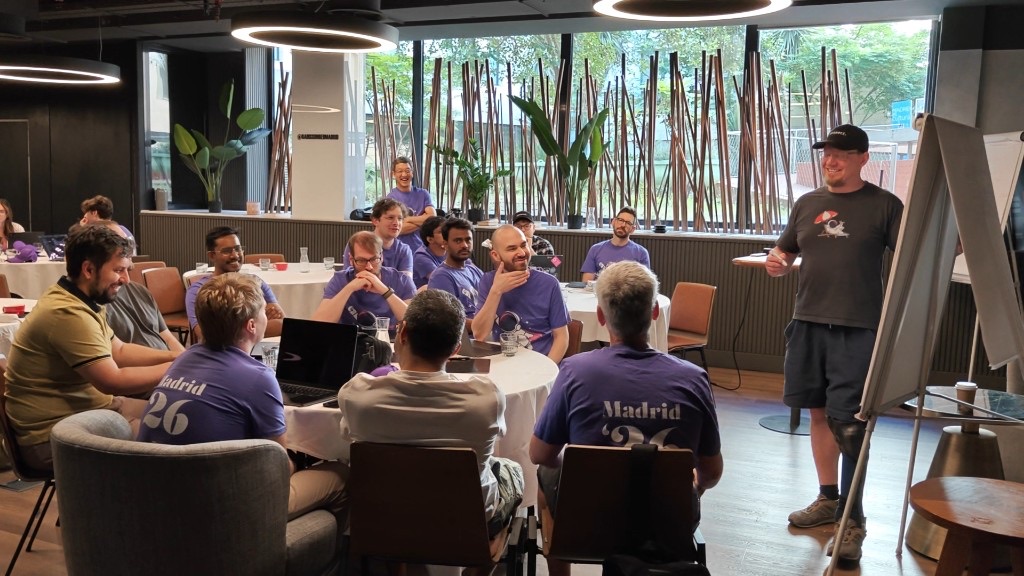
Open source in general, and open source your knowledge specifically! That comes with two aspects: I get to ask questions, and I get asked questions, which is great! I get to deep dive with the different teams to truly understand not only what they do, but how they do it, and we get to pool our knowledge together. You never know where inspiration can come from!
— Mariya, People and Culture teamWear whatever hat needs wearing. Take genuine responsibility for outcomes.
Low ego, high ownership is the one that really lands for me, mostly because I've been living it. For the past several months we've been running with a leaner team, which has meant picking up whatever needed doing, wearing a bunch of different hats, and just taking ownership of outcomes rather than waiting for the 'right' person to do it. That's only possible when the ego is kept aside: you just look at what the team needs and you go do it. That stretch actually made me appreciate this value more, not less. It's easy to say 'high ownership' when things are comfortable, but you really find out what it means when the team's stretched thin!
— Prachi, Finance teamThere's very little 'oh, that's not my department' here. It's really refreshing to work somewhere where people roll up their sleeves and do what needs to be done. I've really enjoyed working so closely with engineers and seeing them jump into conversations in a sales context with prospects at conferences.
— Zeph, Sales teamNo politics, no BS. We move as one team, collaborate, have each other's backs, and care about the people as much as the product and the customers.
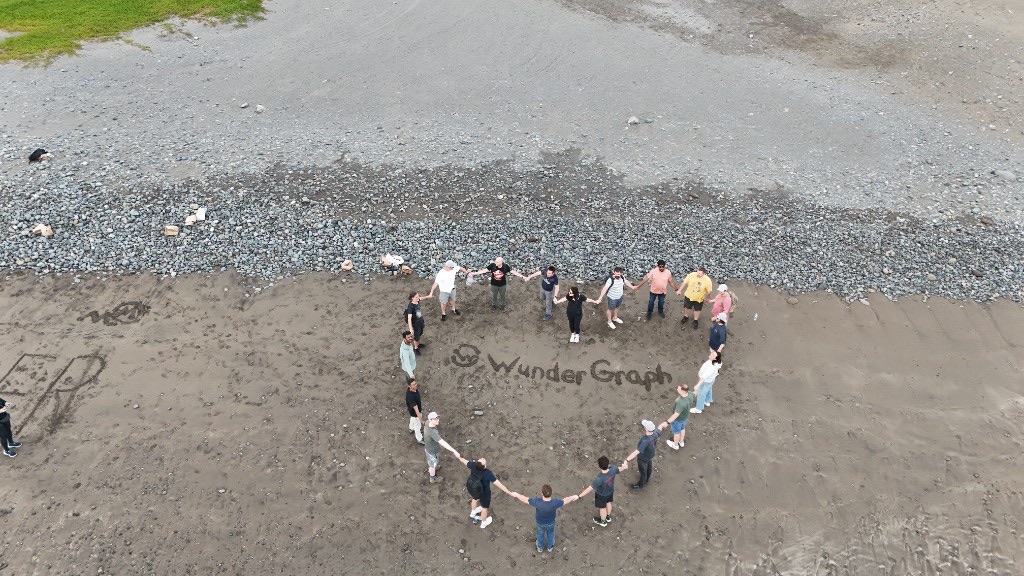
Many of our core beliefs resonate, but I think if we continue to care as much as we do, we can only win.
— Jens, CEOAll of them resonate with me, but the one that stands out the most is 'we genuinely care.' I truly feel like there is not one person who is left behind. Behind all the processes and to-do lists, there are people, people who have feelings, families, and lives outside of work that are considered. And at work, no matter where you are in your journey, you are supported and uplifted because your progress matters.
— Mohamed, Customer Success teamWunderGraph is that rare sort of company where your co-workers quickly become your friends. It's a place where everyone wants to know who you are, not just what you can do. Even if the rest of the world is playing politics and games, we're always here for each other with a kind word, a well-timed Red Bull, or a chocolate bar!
— Lena, Solutions Architects teamIt's one of my own core values as well. I know very well how frustrating bad software feels to use; it drives me nuts at times. Any time this happens, I say to myself that I want to deliver better, something people genuinely like to use.
— Dominik, Engineering teamChange is constant, and we adapt quickly. We demand a lot; in exchange, we offer flexibility and above-market pay, straight up.
Operating in start-up mode means being at ease with uncertainty. The roadmap shifts and the ground moves under you more often than not. What makes that work is people who can sit comfortably in that ambiguity and treat it as the job rather than an interruption, and who are willing to help each other cross-departmentally.
Every team relies on every other team's willingness to switch gears quickly and act as a unit. That is what gets the flywheel loaded and spinning fast.
We ask a lot of each other because building something worthwhile demands it. In return, we give people the flexibility to shape how they work, the trust needed, and pay that truly reflects the weight they carry in the organization.
— Viola, Customer Success teamCurious enough to learn, confident enough to contribute before you feel "ready."
I think we need to get better at ship, learn, repeat, and not just the engineers. Sometimes we overthink.
— Jens, CEOWe challenge each other respectfully, share feedback openly, and aim for growth.
The things I am most afraid of are roller coasters and a silent, content leadership team. What I love about startups is that you have a blank page ahead of you, and you can literally write the making of a company. Would you not want to make it the best you can? I am proud when I see people going above and beyond, even outside the scope of their roles, to help others or close a gap they identified. Growing together as individuals, as a team, and as a company is the closest to a thrilling rollercoaster ride I can imagine without actually going on one.
— Alex, People and Culture teamWe're building the company we always wanted to work for, together.
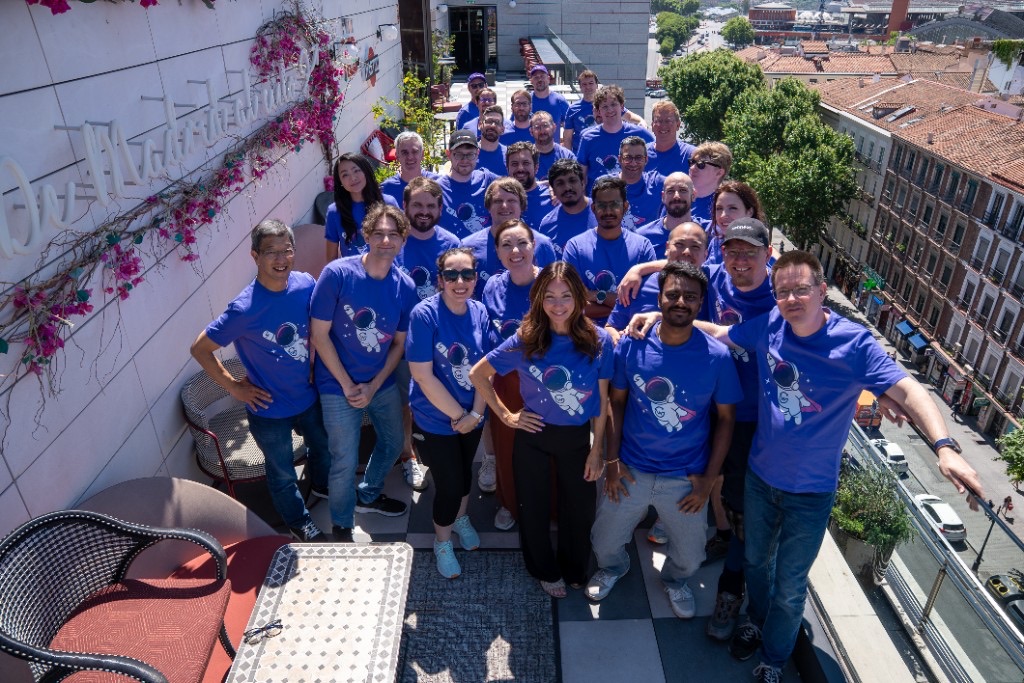
I always thought HR was in opposition to the people. At least that was my experience in the past, and I never had a chance to witness the opposite. WunderGraph was very different, literally from the very first interview with Alexandra. I'm guessing she just wants to attract all the cool people from all over the world to have fun working with the smartest and most talented team.
— Yury, Engineering teamShipping fast is how we out-learn the competition, through faster decisions and tighter iteration loops.
Nithin put this better than we could, talking about Cosmo:
Cosmo was never a perfect product to begin with. When we launched in just a couple of months, there was an immense gap against the competition. But it was important for the product to exist and to get it into the hands of customers. Quick feedback helps us see what the next thing to build or improve is. A lot of that initial architecture held up for over two years across millions in revenue and customer trust, until a bigger challenge came along, and the cycle continues.
— Nithin, Engineering teamMeaningful work can be done from anywhere. We're fully remote: no office, no HQ. What matters is the result the work produces, wherever in the world it happened.
Brendan wrote about this after his first year:
I start early for meetings across time zones, which means I can also pick up my kids every afternoon. Early mornings in exchange for being present when it matters. That's the deal.
— Brendan, Content teamTeams that sing together, stay together. We work hard, celebrate often, and never miss a chance for karaoke. Yes, this is a real value. Yes, we mean it literally.
I like 'work hard, sing hard,' as I love karaoke, and I sing in a choir, so this one's close to my heart.
— Sonja, Product teamThe way we operate should keep up with the company's stage and the times. That's why the core beliefs get revisited by the team often, to make sure they still inform and match our daily working principles. Discussing this recently with Alberto, one of our engineering team leads, already opens space for change:
Maybe a principle about 'data over opinions' would make sense? I always find it easier to get buy-in from people when I have data to back me up rather than convincing them that my opinion is somehow more correct than theirs.
— Alberto, Engineering teamThat's the bigger point underneath all of this: these twelve are a running draft we keep editing as the company changes. We'll argue about whether "data over opinions" deserves to be number thirteen. Someone will eventually make the case that one of these twelve has quietly stopped meaning anything and needs to be rewritten or retired. That's exactly the list working as intended.
In five years, the companies that matter will be the ones that kept relentlessly rebuilding trust with actual humans, in public, admitting when a principle needed an update instead of quietly burying the parts that got inconvenient. Clever AI workflows will be table stakes by then, the same way raw knowledge was for the generation before us. What matters more now is finding ways to cut through the noise and connect to the person on the other side, whether that's a customer, a teammate, a prospect, or just someone who wants to join our team.
People and Culture at WunderGraph
Alex is the Head of People and Culture at WunderGraph and brings over a decade of experience helping start-ups and global teams grow with purpose. On a daily basis, she designs frictionless processes and strategies that make scaling possible and exciting. She helps us build a winning team by hiring top talent globally. During her career, she developed expertise in the end to end employee lifecycle experience, from People Operations and leadership development to culture, engagement, talent acquisition and wellbeing. She is a strong advocate of remote work, lifelong learning, and the power of cross-cultural exposure. Alex writes about how the future of work looks like, as well as recent developments in WunderGraph's team and culture.