Scaling Without Breaking Culture: Lessons from WunderGraph's Madrid Work Week 2026
I’m still coming down from the high of an incredible week in Madrid.
As the person responsible for People and Culture at WunderGraph, organising our in-person events is a chance to do what I love most: bringing people from different countries, cultures, and backgrounds together and seeing them become a close-knit team.
Our team is spread across continents and time zones, so bringing everyone together is an opportunity to strengthen the foundations of how we scale.
This June, we welcomed 31 people to Madrid for an in-person Work Week, including 28 employees and 3 investors, with the rest of our team dialing in for key sessions.
For Madrid, our team flew in from the United States, Sri Lanka, Germany, India, Slovakia, the United Kingdom, the Czech Republic, Italy, Bulgaria, and beyond.
That moment when you see each other after months of remote work is a bit like seeing a puppy: you can’t help but smile.
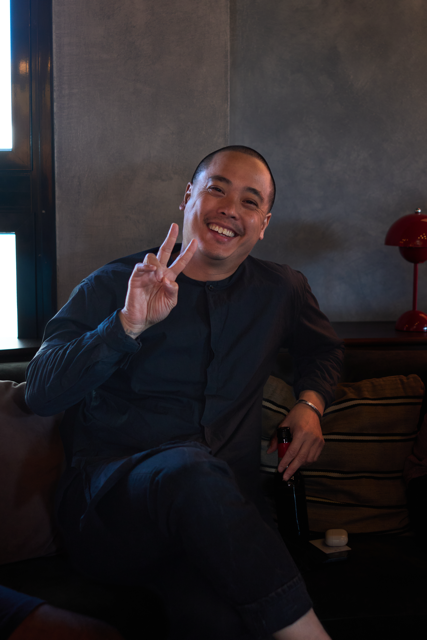
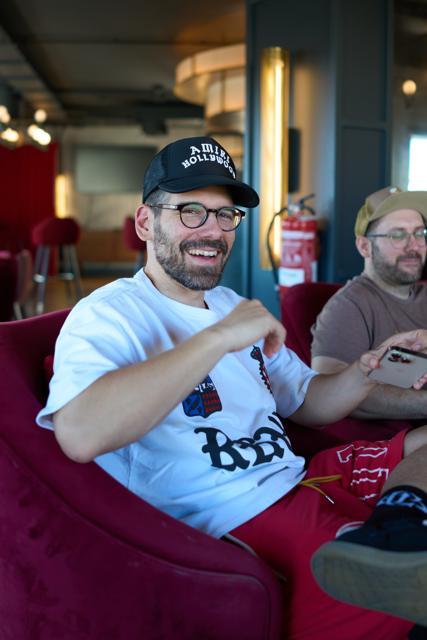
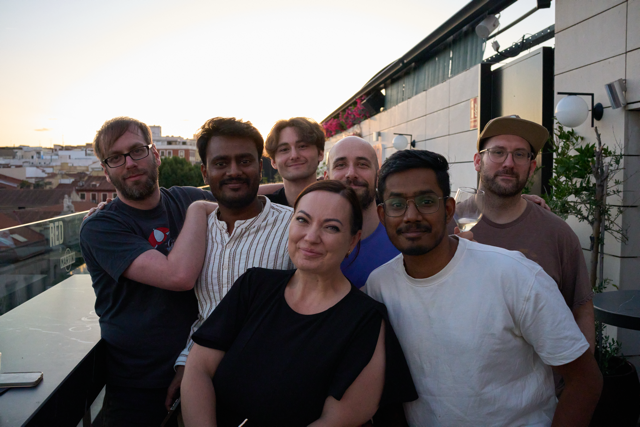
Seeing the team gathered together on the first morning, I felt super proud. Proud of how much we’ve grown. Proud of the people who chose to join us. Proud of the fact that, despite growing more than threefold, the things that matter most still felt exactly the same.
The conversations were candid and open. The debates were passionate and respectful. The ownership was visible everywhere.
Most importantly, people genuinely enjoyed spending time together and being there in person.
This was not a “smile and wave, guys” kind of feeling.
It was more like:
Hell yeah. There are some incredible people in this room, and we’re in for a ride together.
And then another thought crossed my mind.
At what point does a company stop feeling like itself? When do close relationships become harder? When do people stop knowing each other? When does culture become something written in a document instead of something you can feel?
Because if you’ve worked in startups long enough, you’ve seen it happen.
Growth can be wonderful. Growth can also break things.
As a People leader, this is an area that intrigues me more than any other.
Can we preserve what makes WunderGraph special?
Can we continue to create a place where people feel connected, trusted, challenged, and supported?
Can we keep scaling without losing what made people want to join us in the first place?
I don’t think culture is something you build once and then maintain. I think culture is a living thing. It grows. It changes. It gets tested. And if you stop paying attention to it, it slowly drifts.
The reality is that when foundations break, it is not like an earthquake, violent and ruthless. More often, it erodes quietly. One skipped conversation. One silo. One misunderstanding that was not discussed openly and resolved. One team that becomes disconnected from another. Until one day you wake up and realise the company feels different.
Madrid reminded me that culture requires intention. And the reality is, it also requires investment. It requires creating opportunities for people to connect as human beings, not just colleagues. It requires space to break the barriers that can appear when you go 100 miles per hour at a start-up. That is ultimately why we continue investing so heavily in bringing people together.
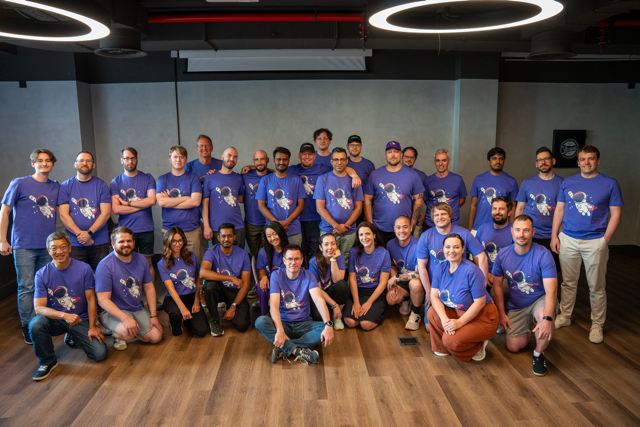
40 people. 12 countries. 18 nationalities. One mission.
Most of us are startup veterans. This is not our first rodeo.
If you’ve worked remotely long enough, you’ve probably developed a productive rhythm and ways to keep yourself sane and connected. Remote work gives people flexibility, focus, and autonomy, and we value that deeply.
But on its own, working remotely for long periods of time can feel isolating.
Collaboration can slowly become transactional. Meetings become calendar invites.
Slack messages replace conversations. You know what your colleagues are working on, but not always how they are doing. Silos don’t appear overnight. They form quietly.
That is why we create opportunities throughout the year to reconnect in person and speed up our collaboration, alignment, and trust.
The objective is alignment on our strategy, priorities, and how we work together. But the deeper objective is connection.
One phrase that my partner and I use is:
“Children, marriages, and flower gardens reflect the care they receive.” After nearly twenty years together, I’ve found it to be true. I also think it is true for remote teams.
Teams reflect the care you invest in them. If you want trust, you need to offer it to people first. If you want collaboration, you need to create opportunities for people to connect. If you want an intentional culture, not an accidental one, you need to purposefully design moments where culture can emerge.
Madrid was one of those opportunities, and the team made the most of it.
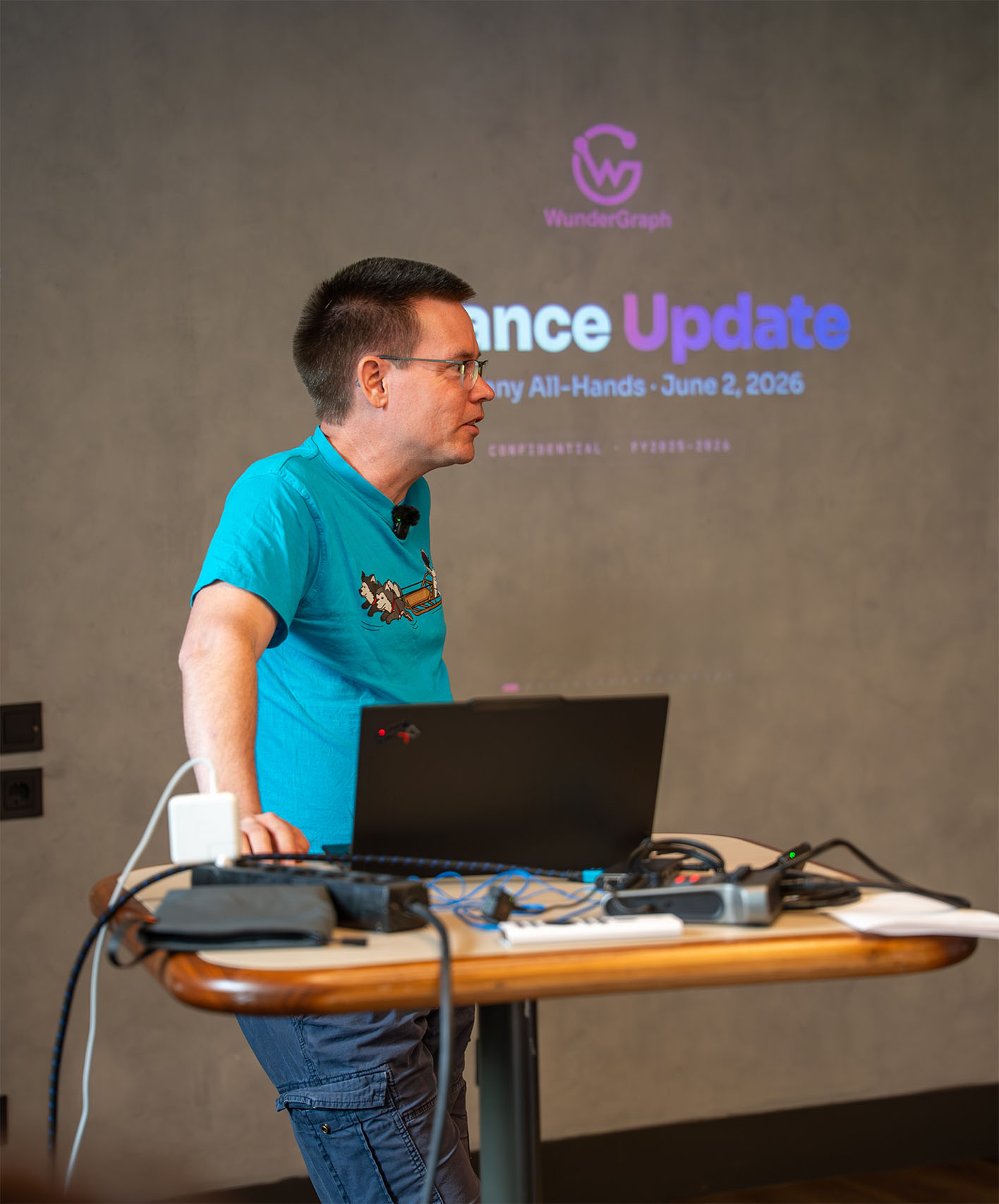
Being a remote company can be hard. At the end, it’s all about people — and people get the best outcomes and fun when working together. Add a beautiful location, and it doesn’t even feel like work at all. :)
— Björn, Chief Operating OfficerThere is a famous saying in hospitality: great service is invisible.
When it is good, you notice the experience, not the service.
I have seen this happen before. When logistics are difficult, people spend energy navigating the event instead of connecting with each other.
So for Madrid, we deliberately simplified everything.
We chose one main hotel as our base of operations. Radisson RED Madrid was perfect for us: central, lively, close to museums, parks, co-working spaces, restaurants, cocktail bars, karaoke bars, and dangerously good takeaway spots.
We kept meeting spaces either on-site or within walking distance.
We organised airport coordination, daily lunch groups, shared dinners, and enough unstructured time for people to create their own moments.
Huge thanks to my sidekick and expert orchestrator, Mariya, who helped everything run smoothly on site.
The goal was to eliminate friction and allow meaningful interaction. One of the simplest things that worked for us was rotating lunch groups. Every day, teams were mixed. Engineers sat with sales. Investors broke bread with the team and got to know us. New joiners were included and immediately integrated. Some of the most personal conversations of the week happened over dumplings and roasted duck at Dim Sum or empanadas.
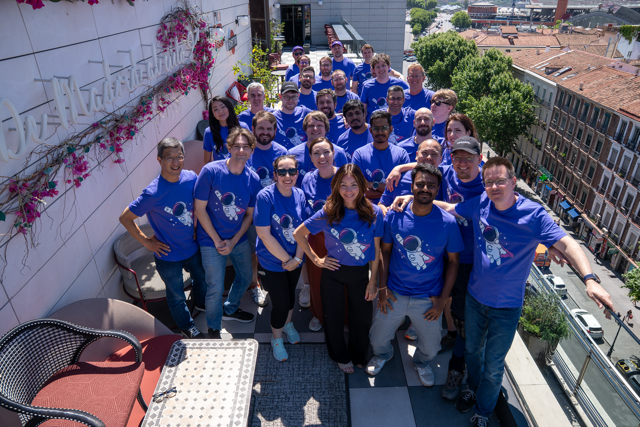
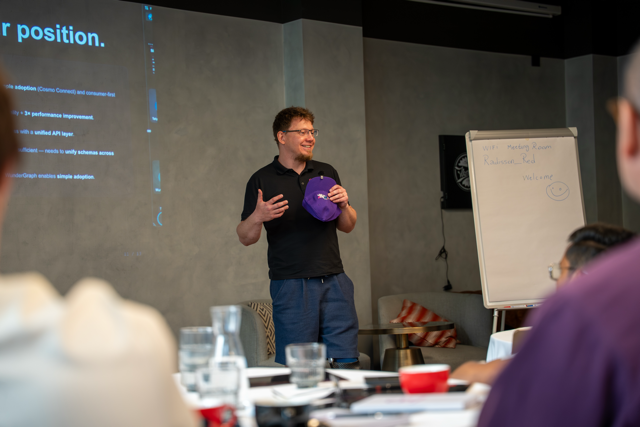
The week started with our State of WunderGraph session.
Jens shared where we are as a company, where we are heading, and what challenges we need to solve together.
Keith walked us through the pipeline and revenue progress, including the companies building on Cosmo.
We discussed the engineering structure that will help us scale, introduced our new Principal Engineers and Team Leads, and shared the Product Lead Engineer rotation, giving more people opportunities to lead delivery, grow new skills, and take ownership.
We aligned on hiring, security, finance, customer feedback, and priorities for the second half of the year. The agenda mattered, but I don’t want this to become a list of sessions.
The real point was this: As we grow, we need to make sure everyone understands where we are going and pulls in the same direction.
One of the most memorable moments came from something we intentionally left unstructured. We invited three of our investors to join us for the Work Week and scheduled an open Q&A with the team. No overly polished presentation. No careful script. Just honest questions and honest answers.
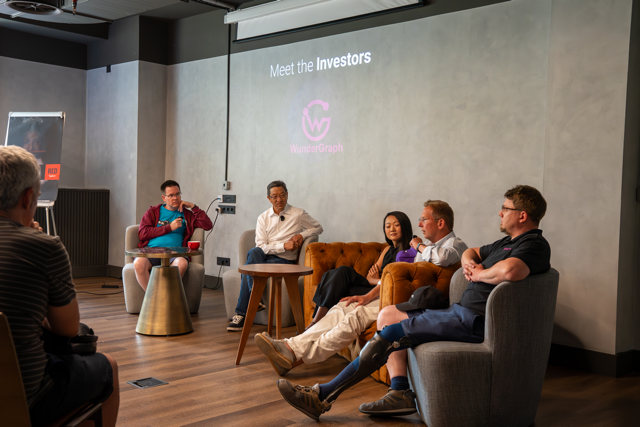
People asked about scaling. About mistakes. About difficult decisions. About building companies in changing markets. About lost and current investment opportunities.
What stood out most was the trust they placed in us and the validation for the direction we are heading. It feels good to hear that, especially when you know how much hard work sits behind it.
I had gone into Madrid with a long list of one-to-ones I wanted to have. People I wanted to check in with. Conversations I wanted to make time for.
The reality? I barely managed half of them; everything went in a flash. Madrid reinforced something important: We have to design for connection. It was seeing investors having lunch with new joiners. The team is exchanging gratitude notes. The follow-up discussions. The laughs at silly moments. Watching someone return to WunderGraph after less than 2 years because they miss it.
Culture is not great because someone in leadership says it is or the company values make you sound cool. Because people behave as if they belong here. You can’t fake that. And honestly, that is what made me emotional. The responsibility.
The responsibility of helping preserve something that feels special. The responsibility of helping people grow while removing the friction that inevitably comes with scale.
The responsibility of making sure that as the company gets bigger, people don’t feel smaller. That is the work.
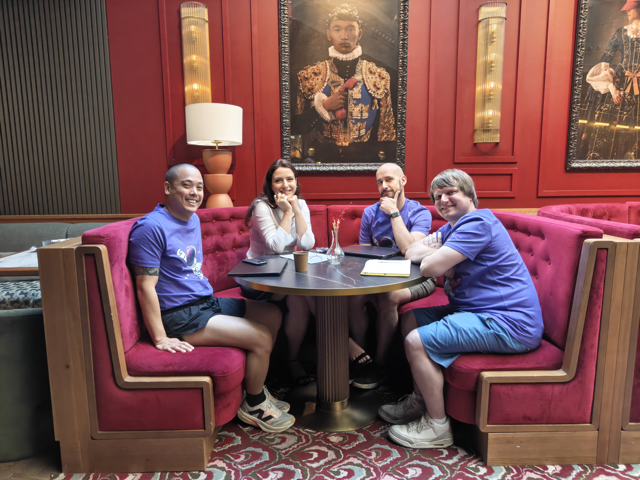
AI featured heavily in our conversations, as you would expect from a technology company in 2026.
Engineering spent dedicated time discussing how AI can improve how we build products. Every team was also given time to experiment with how AI can improve their workflows.
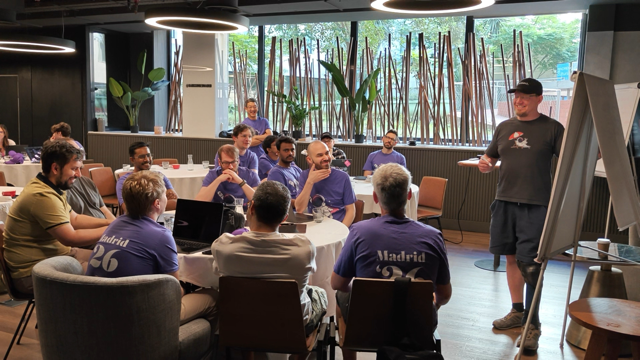
But more broadly, when we built the agenda, we deliberately avoided filling every hour. The mornings were structured around shared company topics, updates, and alignment. The afternoons were left open for team planning, one-to-ones, problem-solving, coaching conversations, and spontaneous discussions. Many companies pack offsites with back-to-back sessions. We chose not to.
Because some of the most valuable work happens in the spaces between the sessions. The quick walk. The coffee conversation. The “Can I grab you for ten minutes?” The late-night karaoke chat that somehow turns into an important company insight.
One of the moments where people said they felt most connected happened on the final evening.
We rented a private rooftop so the team could mingle, enjoy a Spanish sunset, and close the week together.
During the day, we had asked people to write thank-you notes and place them in a gratitude box. At the rooftop dinner, we shared them with the team and started reading them out loud. It was overwhelming in the best possible way. Funny notes. Kind notes. Surprisingly emotional notes. Hard to decipher notes. The kind of notes that remind you that people are paying attention to each other.
Moments like this stay with me. Because they remind me that People work is not just about frameworks, policies, onboarding, compensation, or performance cycles. Those things matter. But at the heart of it, People work is about building trust. And trust is built in moments and presence.
If you are organising a company Work Week for the first time, here are a few things we learned.
- Optimise for one great venue rather than multiple locations.
- Keep company-wide sessions in the morning and collaboration sessions in the afternoon.
- Rotate lunch groups every day.
- Create more unstructured time than feels needed initially.
- Allow even more time for Q&A than anticipated.
- Ensure new joiners are intentionally included.
- Give people space to create their own conversations.
- Finish with a memorable final evening together.
Most importantly:
Design for connection. The productivity will follow.
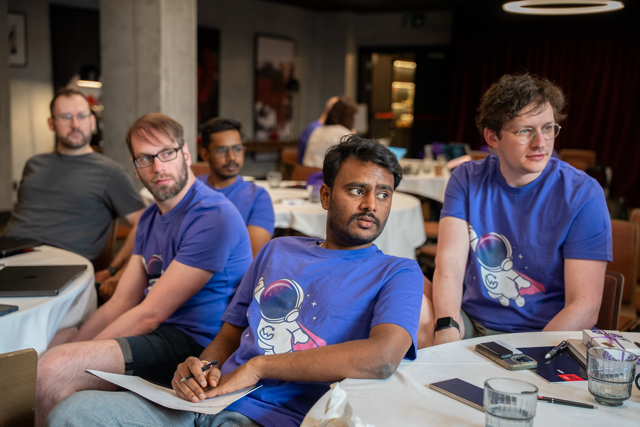
This team works across a 13-hour time zone gap, but you’d never know it. They collaborate effortlessly, and they really enjoy each other’s company. Even on my very first day, they made me feel part of the team and part of the fun.
— Sam, Principal Engineer and Team Lead, on his first week on site with usOne thing I've learned about scaling is that every stage solves one set of problems and introduces another.
The hardest part in Madrid wasn't logistics. It was adjusting to the new size of the team on site. When we were twelve people, spontaneity worked. We'd often say, "We'll figure it out on the day," and somehow we always did.
At forty people, that's no longer true.
I came to Madrid with a long list of one-to-ones I wanted to have and left with an even longer list. There were simply more conversations, more relationships, and more opportunities than there was time.
That realisation was both exciting and slightly terrifying.
Looking back, one thing I would change is having the leadership team align a day before the wider Work Week starts. Many of the leadership conversations happened during the work week itself. If leadership aligns beforehand, they could spend even more time with the team, listening, connecting, and being present in the moments that matter most. A lesson for next time.
Ska, one of our investors asked me how we keep our culture intact.
At WunderGraph, a few things have become particularly important as we've scaled:
We meet in person frequently, such as during the work week in Madrid. Remote work gives us flexibility, but trust is built faster face-to-face. We create multiple opportunities throughout the year for teams to reconnect, align, and simply spend time together.
We deliberately mix people. Lunch groups, project work, dinners, and social activities are designed to create connections beyond immediate teams. Silos are easier to prevent than to fix.
We hire for values, not just skills. Technical excellence matters, but so do ownership, humility, curiosity, and collaboration. We are intentional about who joins the team because every new person shapes the culture. Equally, we part ways quickly if we realise there is no fit.
We keep leadership accessible. Founders, leaders, investors, new joiners, and individual contributors all share the same spaces and conversations. We try very hard to avoid creating unnecessary distance between people.
We create opportunities for ownership. Whether it's our Product Lead Engineer rotation, leading initiatives, mentoring others, or stepping into new responsibilities, people grow when they are trusted.
We revisit how we do things regularly. Culture isn't a document we wrote once. How you work evolves with the team. We revisit it, challenge it, and improve it together.
We create space for gratitude and recognition. The gratitude box in Madrid might sound like a small thing, but recognising each other matters. People want to know that their work and effort are seen.
As I write this, part of our team is already traveling to conferences in Amsterdam. Meanwhile, we are quietly planning our end-of-year company retreat. The destination remains a secret for now.
In 2025, we went to Alta to see the Northern Lights, gathered in Bretten for hackathons, finance meetings, and all-company alignment, had a wonderful getaway in Gran Canaria for our annual retreat, met in Wuppertal for collaboration, held a sales strategy retreat in New York, joined API Days in Paris, and met customers, prospects, and investors in San Francisco.
2026 has already been busy too.
We had strategy and roadmap alignment in Miami, sponsored GraphQL Conf San Francisco, had talks at API Conference London, gathered in Madrid, and joined GraphQL Day Amsterdam.
You will also be able to meet us in Santa Clara, New York, Stockholm, and one more location I will keep as a surprise.
What remains true is this:
We want to keep investing in space for in-person connection and alignment.
Because winning as a company is about building great products, reaching ambitious revenue goals, and becoming a united team.
Madrid got the team together. It also reminded me how much work it takes.
Culture does not scale automatically. Trust does not scale automatically. Connection does not scale automatically. You have to keep investing in them. You have to create space for them. You have to choose them over convenience again and again.
But standing in that room in Madrid, watching our people from across the world laughing together, challenging each other, helping each other, and planning what comes next...
I thought: Maybe we are doing something right.
My wish is to be able, as a company, to keep on getting the team together for on-site work weeks. Because they remind us who we are. Because they help us become more.
Special thanks to everyone who traveled across the world to be there. We’ll see you at the next one. Until then, feel free to keep in contact with what we are building — or explore our open roles.
People and Culture at WunderGraph
Alex is the Head of People and Culture at WunderGraph and brings over a decade of experience helping start-ups and global teams grow with purpose. On a daily basis, she designs frictionless processes and strategies that make scaling possible and exciting. She helps us build a winning team by hiring top talent globally. During her career, she developed expertise in the end to end employee lifecycle experience, from People Operations and leadership development to culture, engagement, talent acquisition and wellbeing. She is a strong advocate of remote work, lifelong learning, and the power of cross-cultural exposure. Alex writes about how the future of work looks like, as well as recent developments in WunderGraph's team and culture.